
Final Round AI Review 2026: Safety, Answers & Pricing

I picture using Final Round AI in a real interview. Two questions matter: will the setup stay out of view? Will the answer sound specific enough to use under pressure?
Final Round AI is a capable-looking desktop copilot. I would not treat it as a low-risk default. It combines resume, coding, and live-answer workflows. Public reports still raise concerns about freezes, generic answers, irrelevant prompts, and billing support.
The decisive safety result is negative. In my two-computer test recording, the interviewer-side computer still showed the Final Round AI client during screen sharing. The broader buyer warning is an uneven live experience.
I ran the sharing and personalization tests myself and recorded the results. The setup, privacy, and refund rules formed another part of my review. I also read reports covering timing, recognition, quality, coding, usability, and billing. This review covers all eight buying dimensions in one place.
Quick Facts
| Detectability & Safety | Final Round AI was not safe to treat as hidden in my two-computer scenario because the interviewer-side view still showed the client |
| Speed | Final Round AI's live timing is inconsistent in community reports, including 3–5 seconds of delay and freezes |
| Question Recognition | Final Round AI's question recognition is unreliable: setup-like prompts can trigger answer-like output before the question is clear |
| Answer Quality | Final Round AI's answer quality is uneven: detailed responses can still be generic or overlap |
| Coding Support | Final Round AI's coding support can retain stale context after a task switch, so Screen Help answers need checking |
| Ease of Use | Final Round AI's basic setup is ordinary; the meaningful usability risk is live reliability, with a user reporting non-response and an unfunctional app |
| Price | Final Round AI's subscription page lists $150 monthly, about $250 billed quarterly, $300 billed annually, and about $500 billed annually for Premium MAX; a free plan is also shown |
Strengths
- I get a broad desktop workflow: resume context, mock interviews, live Copilot, coding help, and debriefs in one product.
- I can attach a resume and role context to a live session, and my personalization test recording shows that context being used in an answer.
Weaknesses
- Reddit users describe freezes and several-second lag, making Final Round AI’s live timing a material risk.
- I found uneven answer quality: third-party captures and Reddit reports show generic, overlapping, or irrelevant output.
- My two-computer Zoom test exposed the Final Round AI client to the interviewer-side view, so Stealth Mode failed in that scenario.
Overview
Final Round AI is a desktop interview assistant. It combines preparation, live Copilot guidance, coding help, resume context, and post-interview feedback. I found three stated audiences: career switchers, first-role candidates, and final-round candidates.
The About page names Michael Guan as CEO and Jay Ma as CTO. It describes the business as San Francisco-based. The page also advertises $8 million in total funding. I treat these as company-stated facts. They do not show consistent live performance.
The workflow is desktop-first. I found that setup requires downloading the app and granting microphone, system-audio, and screen permissions. It also requires a Goal with a resume or job description. The product offers Stealth Mode for supported sharing setups. Screen Help targets coding and system-design prompts.
That combination is the main appeal: preparation and live help stay in one workspace. It also raises the stakes. Timing, context, permissions, and billing all affect the same interview session.
Safety
Final Round AI markets Stealth Mode for supported screen sharing. Its positioning suggests that the Copilot window should stay out of the shared view. That claim failed in my two-computer interview test.
I ran the two-computer test myself. One computer ran Final Round AI and started the Zoom share. The second computer acted as the interviewer-side view. It still showed the Final Round AI client. The failure is visible in.
The result is specific to this setup, so I do not generalize it to other platforms. It is still enough for me to reject Stealth Mode as a safe default.
“Stealth” is configuration-dependent, and my test recording shows it failing in this setup. Screen sharing, recordings, proctoring, and platform monitoring remain separate exposure paths.
Platform Detection
Coding assessments add a harder boundary. HackerRank’s Desktop App Mode documentation says the mode blocks remote access, screen sharing, and screenshots. It restricts other applications and enforces full-screen behavior. It can also use AI plagiarism or image analysis. That makes Final Round AI unsuitable inside that mode; meeting-app Stealth does not override platform controls.
If answer exposure is the main risk, I would compare AI interview assistant. InterviewFox Dual-Device Mode keeps the answer surface on a separate physical phone. The shared computer has no answer surface.
Land offer with Safer AI Interview Assistant
Skip the risky invisible apps. Our dual-device mode keeps it simple and undetectable. You crush the interview, we handle the answers.
Get started. It's freeLoved by 100,000+ candidates
If You’re Caught
I treat a monitored coding assessment as a hard stop. HackerRank Desktop App Mode can block other applications, screen sharing, and remote access. Final Round AI may be unavailable before it can help. A meeting-app result does not transfer to an assessment session.
Speed
Live response time varies with the device, audio path, and interview environment. Public reports describe freezes and several-second delays. That makes live timing a material risk.
I read Reddit reports describing freezes and blank loading states. One author says the whisper prompts ran 3 to 5 seconds behind what was being said. That is the practical speed warning. A late answer is not useful in the moment.
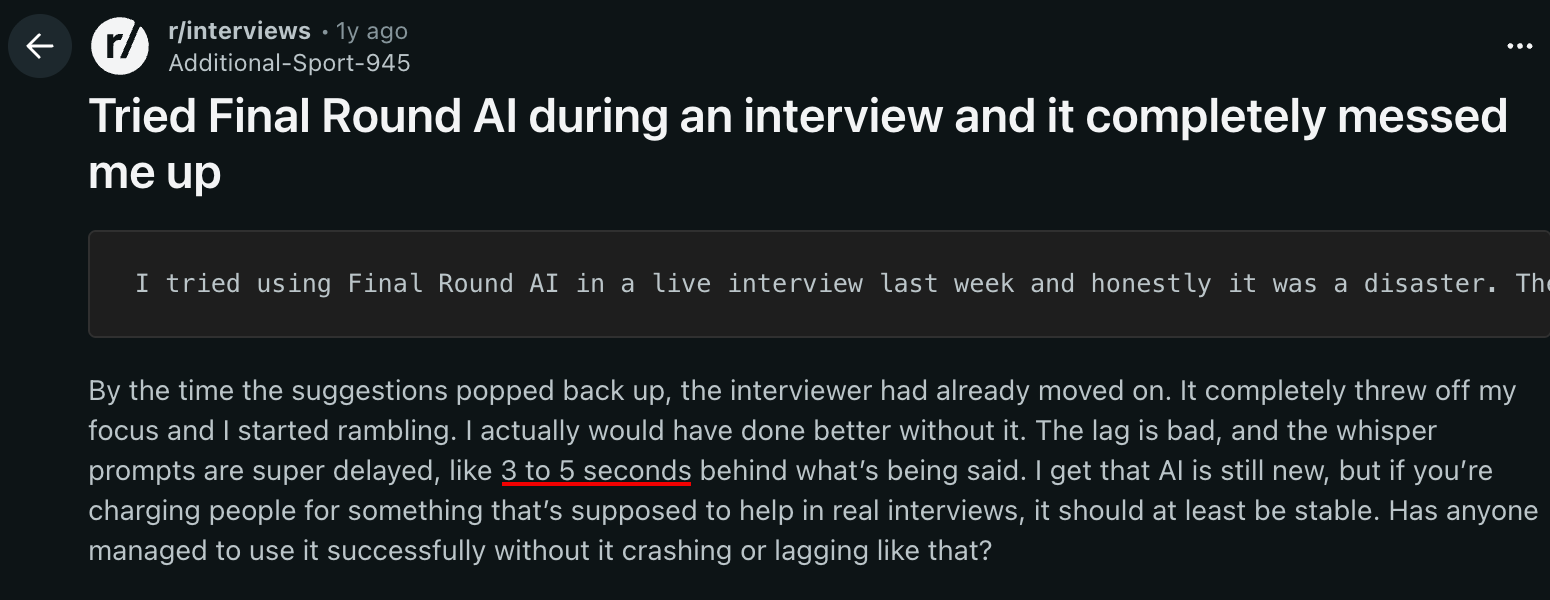
Reddit report: the author says the prompts were 3 to 5 seconds behind what was being said.
The delay will vary by device, audio path, question type, and interview environment. Live response is therefore setup-dependent, not a stable product-speed claim.
Recognition
Final Round AI can produce answer-like text before the question is clear. That makes active-context verification part of using its suggestions.
I reviewed a third-party capture in which setup or confirmation language is followed by answer-like output. The visible responses include “That sounds good, thank you.” and “Not a problem at all, please go ahead.”
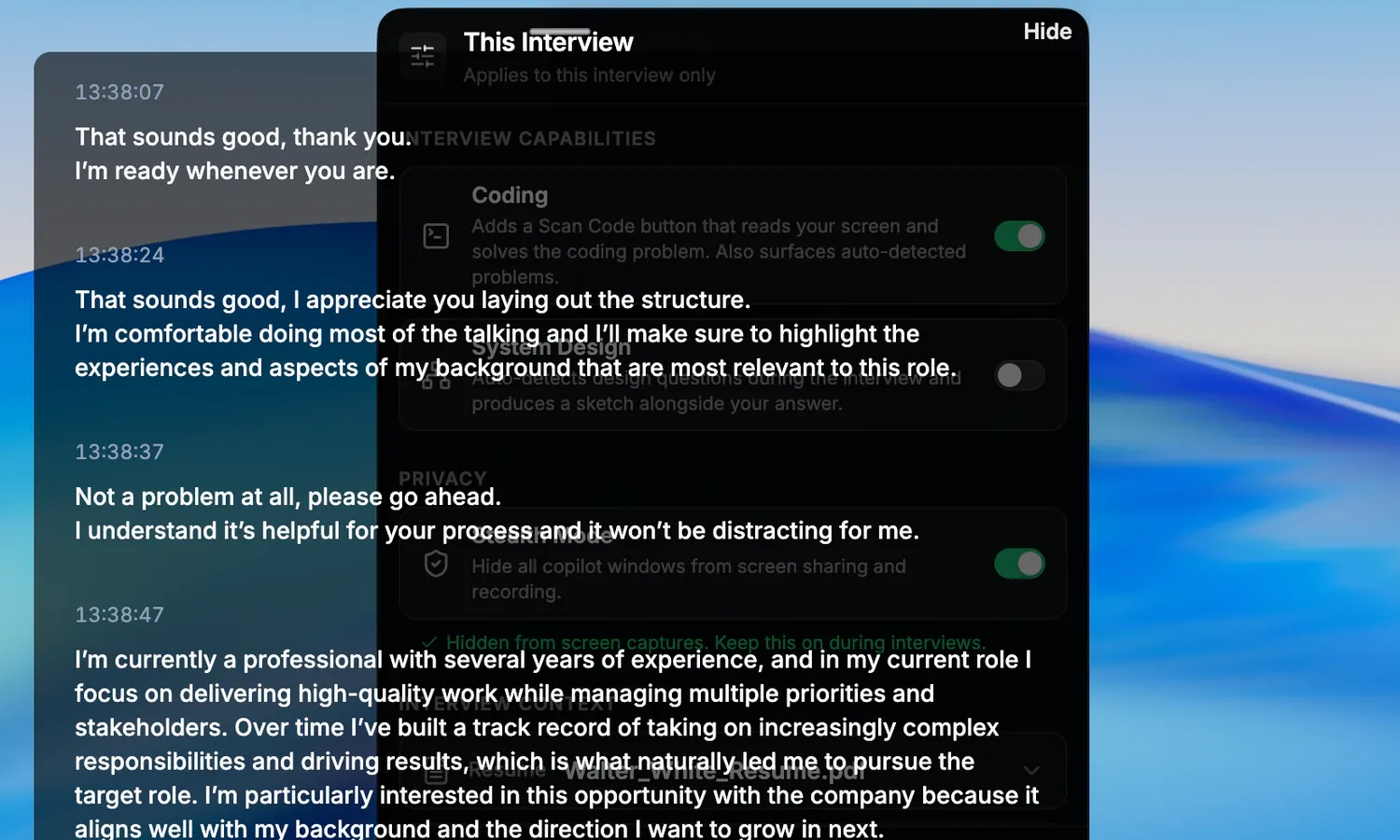
Third-party capture: setup-like responses are visible in the answer stream.
That is a recognition problem, not just a wording problem. The assistant may treat a confirmation or stale transcript as the next question. Manual control remains necessary during topic changes.
Quality
Final Round AI can generate long, polished-sounding answers. I do not treat length as proof that an answer is specific or current. Natural delivery still needs judgment.
The Reddit material points in the same direction. One commenter describes unstable service and repeated general answers. I treat that as community evidence, not as a controlled test.

Reddit comment: the product is described as unstable and prone to repeating definitions.
I treat Final Round AI as a draft generator. Its output is not a script.
Personalization
Final Round AI has a real resume-and-role context path. User feedback does not support assuming that every live answer will sound tailored.
I ran and recorded the personalization test myself. It shows an uploaded resume and the role “pm @ google.” The live Copilot panel uses that context. It produces an answer about an ML and financial-data project. I captured that workflow in.
I also read a Reddit report about prompts that felt too safe and poorly tuned to the candidate’s background. The candidate received only “improve your tone” as feedback, without an actionable tip. My conclusion is practical. The product can carry context into a session, but that context does not ensure tailored feedback.

Reddit report: the author says the prompts were not tuned to their background and the feedback was not actionable.
Coding
Final Round AI’s Screen Help targets coding and system-design prompts. A context switch can still leave a detailed answer attached to the wrong task.
I reviewed a third-party coding capture. A visible answer is headed “Hashing + Base Conversion” after a coding-context change. The answer is not empty. The problem is that it can still address the previous task.
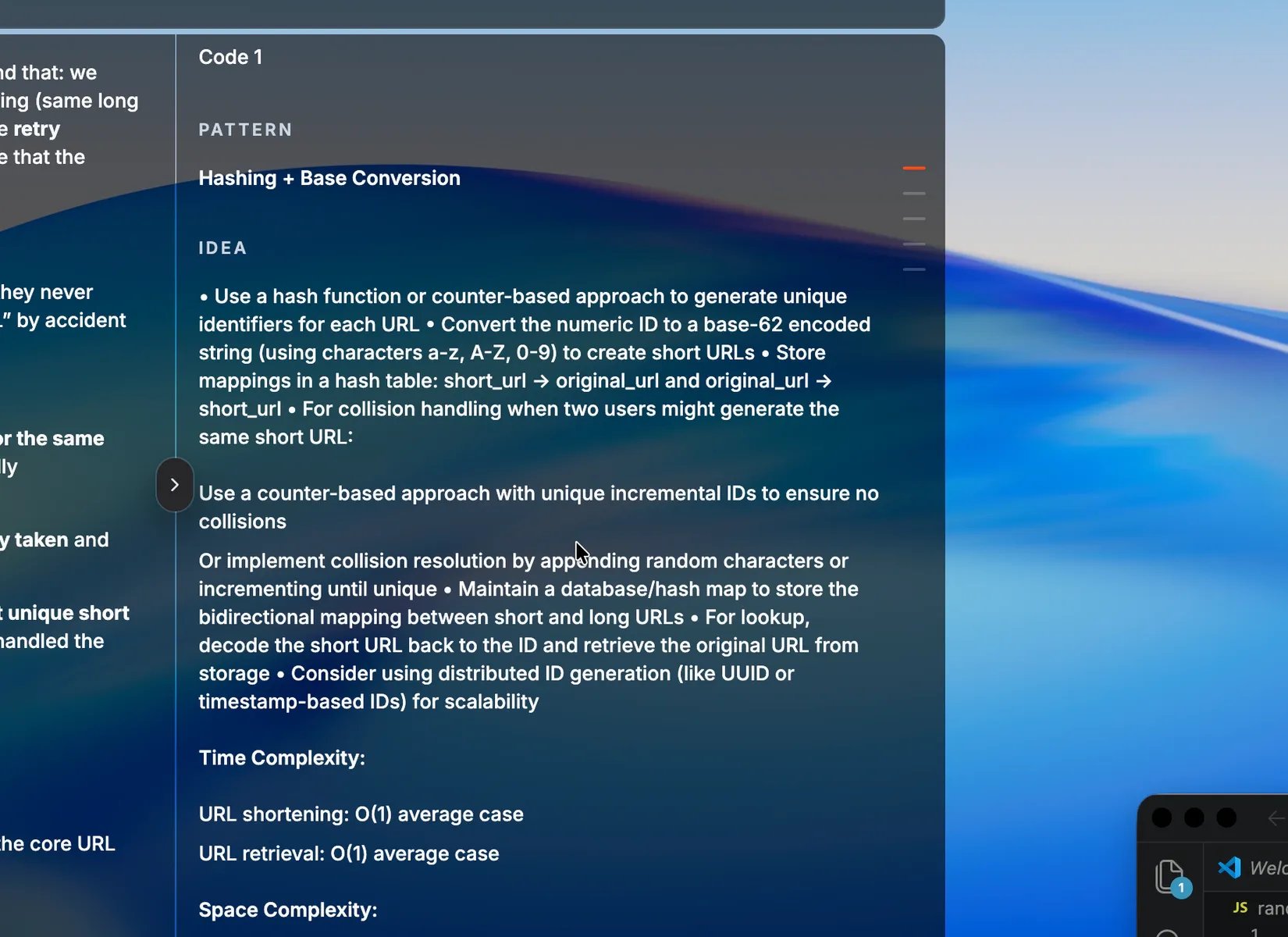
Third-party capture: the Hashing + Base Conversion answer heading remains visible after a coding-context change.
Context verification remains part of the coding risk. HackerRank’s boundary applies here too.
Usability
Final Round AI's basic setup is ordinary for a desktop interview app. I do not treat microphone, system-audio, or screen permissions as a product-specific usability weakness.
The product-specific workflow is a Goal-based workspace. I must create a Goal and attach interview material before live use. The stronger usability concern is live behavior after setup. One Reddit commenter says the AI never responded. The commenter calls the app buggy and unfunctional.

Reddit comment: the author says the AI never responded and the app was buggy and unfunctional.
The live stream is a poor single point of failure for the interview.
For a sudden interview, I would value InterviewFox Full-Screen Mode. It opens assistance directly on a phone. It does not require a desktop client to start. That solves startup time, not exposure.
Pricing
I checked the live subscription page directly. The Free Plan is $0, and Monthly is $150.
Quarterly is about $250 billed every three months. Yearly is $300 billed annually. Premium MAX is about $500 billed annually.
Billing auto-renews until canceled. Canceling future renewal does not refund the current period.
The official refund policy gives a 3-day or 72-hour window for eligible charges. It allows one claim per customer. It defines substantial use as two sessions longer than 30 minutes each. Approved refunds take 5–7 business days. Monthly charges after the window are generally final.
A Reddit comment describes an accidental $149 renewal and anxiety about getting a refund. That is not a verified billing record. I still see it as a reason to inspect the renewal date.
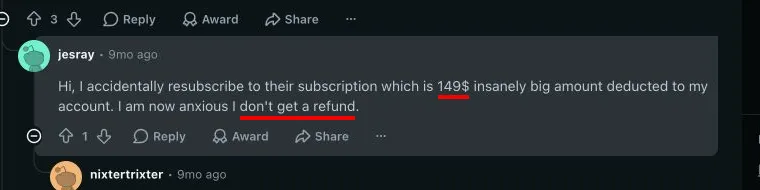
Reddit comment: the author describes a $149 renewal and says they were anxious about getting a refund.
The refund window is a narrow safety net, not a free trial. Auto-renewal and the substantial-use rule make the exit terms material before purchase.
Skip It If
I would skip Final Round AI when a frozen answer could damage the interview. I would also skip it on a platform that monitors the desktop. For a one-off interview, the $150 monthly plan may not justify the cost. Reliability reports and limited refunds make those poor test conditions.
Worth Considering If
I would consider it if I want one desktop workspace. It combines mock interviews, resume materials, live Copilot guidance, coding support, and post-interview feedback. That workflow is more consolidated than a single-purpose tool.
What Users Are Saying
I found a mixed but clearly negative public signal. Trustpilot shows 2.9 out of 5 from 277 reviews. Recurring complaints mention price, unexpected charges, refunds, support, freezes, delays, and irrelevant output.
The Reddit screenshots above make that pattern concrete. I read one report describing a freeze and 3–5-second lag. Another describes unstable service and repeated general answers. A third describes background mismatch and non-actionable feedback. The billing comment captures renewal and refund anxiety. I treat these as self-selected community signals, not prevalence estimates.
My judgment is straightforward. The feature breadth is real. Reliability, answer relevance, and billing clarity recur across public feedback. That combination makes it a poor fit for candidates who need predictable live performance.
Comparing Final Round AI and InterviewFox
Final Round AI suits candidates who want a consolidated desktop workflow. I would compare the products differently when exposure, startup, or personal context is the main constraint.
InterviewFox’s AI interview copilot is the alternative I would compare for separate-device assistance. The key issue is keeping personalized live help off the interview computer.
Land offer with Safer AI Interview Assistant
Skip the risky invisible apps. Our dual-device mode keeps it simple and undetectable. You crush the interview, we handle the answers.
Get started. It's freeLoved by 100,000+ candidates
First, InterviewFox Dual-Device Mode puts answers on a separate physical phone. The shared interview computer does not display the answer surface.
Next, InterviewFox Full-Screen Mode opens assistance directly on a phone. It addresses sudden-interview startup. It does not address answer exposure.
Then, InterviewFox’s Prep Agent can use a resume and target-interview context through WhatsApp or SMS. That context can continue into the real-time assistant for live follow-ups.
I would choose InterviewFox when assistance must stay off the monitored computer. Fast phone startup and preparation context are two other reasons to choose it.
FAQ
Is Final Round AI safe to use?
I would not call Final Round AI safe by default. In my two-computer test recording, the interviewer-side view still showed the client during screen sharing. That is a failure in the tested setup; coding-platform controls add a separate exposure path.
Does Final Round AI work for coding interviews?
I see Screen Help as a coding aid, but context can persist across task changes. The third-party capture shows how a detailed answer can remain tied to an older problem.
Is Final Round AI worth the price?
I would consider the price worthwhile for the combined workflow. Public complaints about delays, generic answers, and billing make it a poor fit for candidates who need predictable live performance.
Can I get a refund from Final Round AI?
I would treat the refund as a 72-hour, usage-limited exception. It is not an unrestricted trial. The policy allows one customer claim. Two sessions longer than 30 minutes count as substantial use. Canceling renewal does not refund the current period.
Does Final Round AI use my interview data?
I would read the privacy policy before uploading sensitive material. The policy says Final Round AI collects interview transcriptions, questions, responses, resumes, job descriptions, and usage data. That information may support service delivery and improvement. The company may also test or train AI models with it.
Conclusion
I see Final Round AI as a broad desktop copilot. Its resume, live-answer, and coding workflow is genuine. Public risks include timing, context accuracy, answer relevance, and billing clarity.
It fits candidates who value an all-in-one workspace. It is a poor fit for anyone who needs predictable performance or a simple one-off purchase.